Getting Comfortable with Discomfort
What’s keeping you in your comfort zone? What will it take for you to step over the edge?
Within my coaching and consulting work, I often work with teachers, administrators, and staff who are questioning what's next in their career journey.
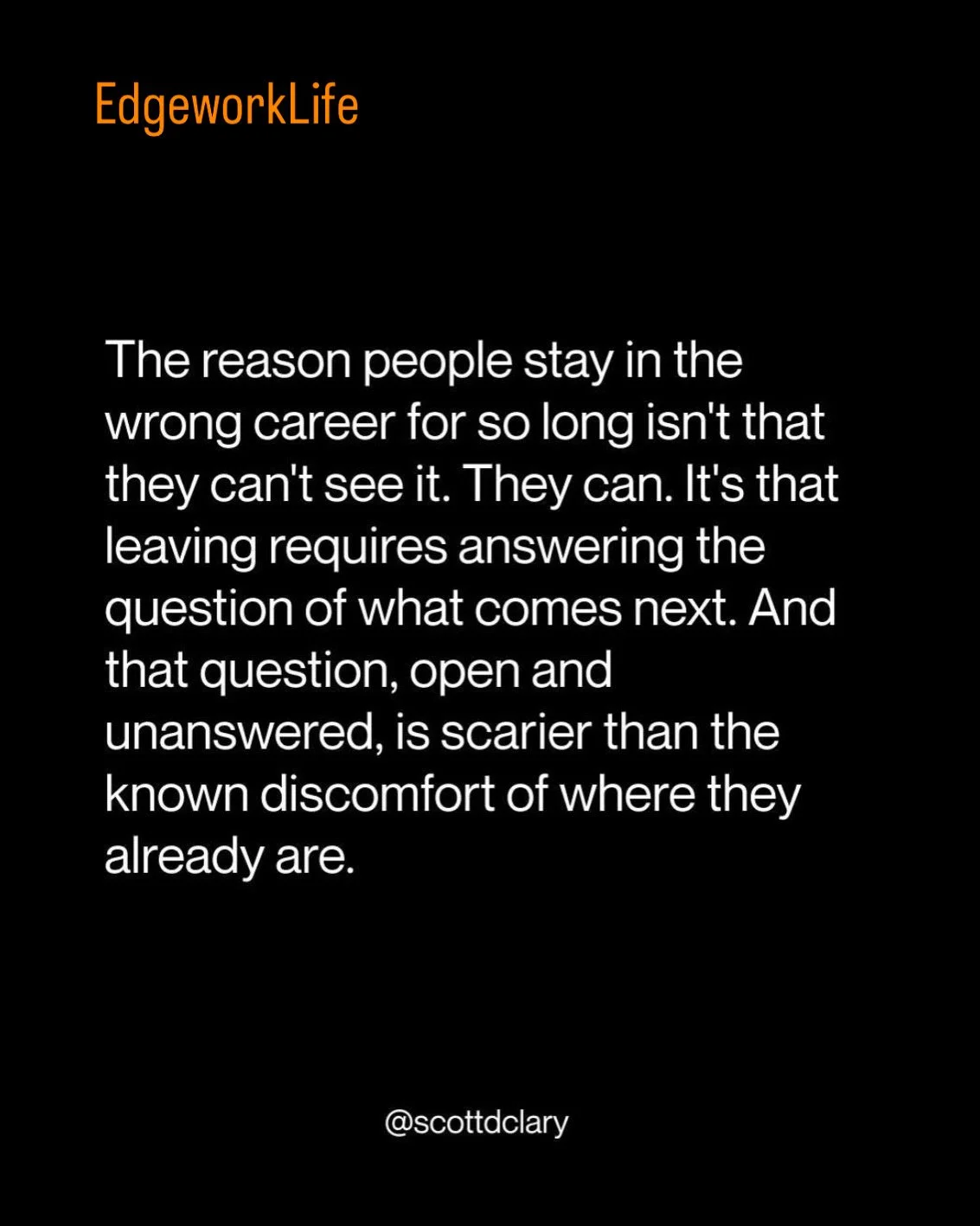
Scott Clary nails it when he says, "The reason people stay in the wrong career for so long isn't that they can't see it... it's that leaving requires answering the question of what comes next."
Even for those who aren’t in the “wrong” career but who are instead choosing to leave their current position or shift careers (either because circumstances have changed or they intuitively know they are ready for something else), the next step into the unknown is overwhelming and anxiety-producing.. As Scott puts it: "The open and unanswered is scarier than the known discomfort of where they already are."
Yes! This is the essence of EdgeworkLIfe! Our tendency is to seek comfort even when it's counter to our well-being and growth. By leaning into edgework - uncovering our fears, reflecting on where we are, getting clarity on what we want, and understanding our strengths - we can embrace personal and professional growth and take the next step. Ultimately, we thrive when we have a deeper awareness of what’s keeping us our comfort zone. And, therefore, keeping us from growing.
I believe that discomfort is a good thing. It's a sign that we are on the edge of something new. Perhaps we’ve taken just a small step into a new experience or a new skill, or perhaps we are contemplating a huge leap into a new role or career.
Pay attention to that feeling of discomfort. And when you feel it, do this:
Name it. By acknowledging our feelings of discomfort we reduce it's power over us. In fact, in naming it we begin to see discomfort as an ally and a signal of our growing awareness and wisdom.
Begin to note how you feel, what you say, and what you do when you’re uncormforable. Are you retreating? What sort of language are you using with others and with yourself (affirming, naysaying, avoiding)? Start using language and behaving in ways that affirm for yourself “I’ve got this.” That doesn’t mean you have the answers or know the pathway. It DOES mean that you have the capacity for managing ambiguity and uncertainty.
Write down what’s comfortable. Perhaps it’s your current salary. Or the predictability of routine or the commute. You may feel particularly connected to your current community and its sense of familiarity. Perhaps you possess all the competencies to do your current job well (and the idea of stepping out of that is slightly terrifying).
Write down what's UNcomfortable. In other words, what feels unknown or uncertain? You may be worried whether you possess the necessary experience or knowledge to be successful. Are you fearful of failure? Or, perhaps, success? This step often puts fear into perspective. When we have a better understanding of WHY we are fearful and out of our comfort zone we are better able to focus on HOW to address those concerns. Bonus: As we begin to see the next step as more manageable, our confidence increases.
Take baby steps. Often, we look at career (or life) changes through an “all or none” lens. In reality, we can take some small steps. Take that new course. Visit that new city. Take on some new responsibilities within your current role. Create a new budget with that reflects that new salary (could be higher, could be lower).
Wherever you are on your journey - seeking a new career, a new role, or a new life - practice getting comfortable with discomfort. Those feelings of inadequacy and uncertainly are signals that you are leading out of your comfort zone. And that’s a good thing! Remember, our intuition is to stay safe and stick with what’s familiar. So go ahead - stick a toe over the edge.